

These Two Special Interest Shows Got It Right
"Shrinking" + "Ted Lasso" Are Healing My Inner Child

I’ve watched a lot of television that flirts with vulnerability without actually committing to it.
Characters who get emotional for exactly one episode and then snap back to baseline. Leaders who have a Meaningful Moment and then return to performing competence like the whole thing never happened. Writers who understand that vulnerability is compelling on screen but stop short of showing what it actually does to a person, and to everyone around them.
And then there’s Ted Lasso and Shrinking.
Two Apple TV shows. Different premises, different tones, completely different worlds. And somehow they’ve both built the same argument, from completely different angles: that the most powerful thing a leader can do is refuse to pretend they’re okay when they’re not.
I’ve been thinking about this for a while. Not as a TV critic, but as someone who leads organizations, talks about this stuff publicly, and has spent a lot of my life performing competence I didn’t have while quietly falling apart underneath it.
Ted Lasso and the panic attack nobody was supposed to see.
Ted Lasso is a man who hides behind warmth. That’s the thing the show takes its time revealing. The biscuits, the jokes, the relentless positivity…it’s not fake, exactly, but it’s also armor. It’s a way of filling every room with so much light that nobody can see the darker corners.
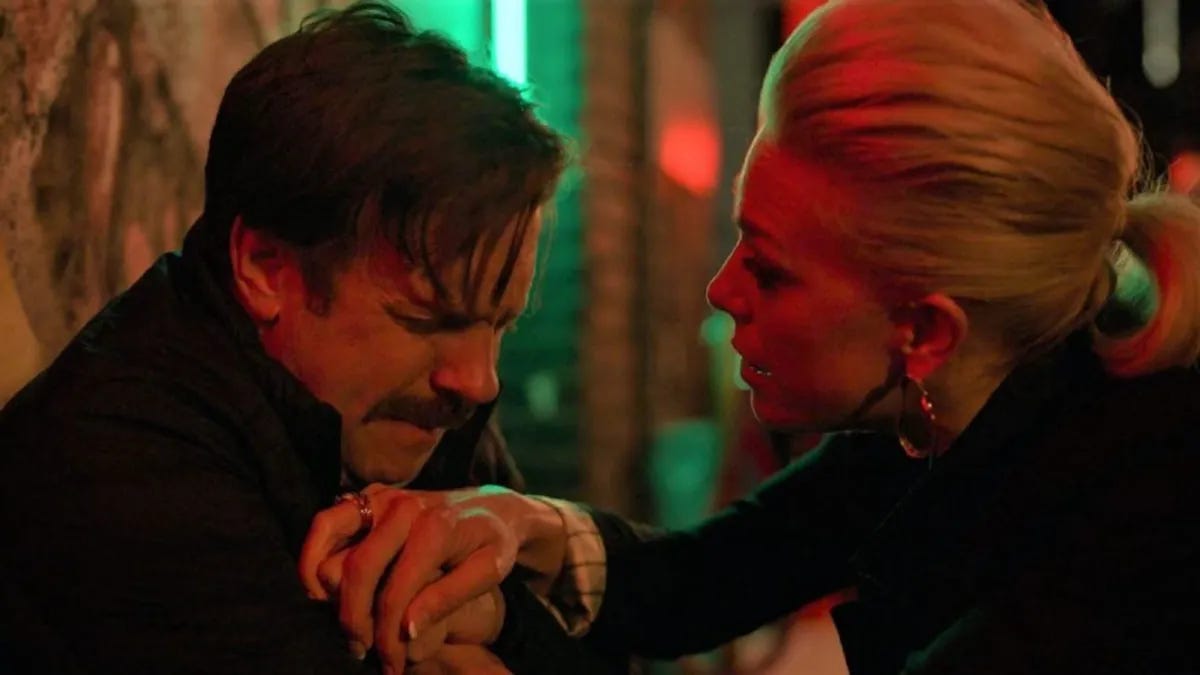
And then Season 2 happens.
Ted has a panic attack in the middle of a match. In front of his staff. On the sideline. And the show doesn’t treat it as weakness, it treats it as a crack in the facade through which something real finally starts to breathe.
He eventually shares with the team’s sports psychologist, Dr. Sharon Fieldstone, his father’s suicide and his own personal panic attacks, and the help and advice he receives from her helps him deal with his own anxiety and become a better coach and person.
But here’s the part that matters for the leadership piece: when Ted shared the truth about his panic attack to his team of coaches, it provided a safe space for each of the others to “confess” their own imperfections to each other (aside from Nate).
The beauty of this show dismantling toxic masculinity, while highlighting vulnerability, connection, and how nobody gets through life alone is something I think about often.
One person refusing to pretend to be strong when they can no longer keep up the facade, creates permission for everyone else to stop performing theirs. It’s not a speech. It’s just Ted, in the room, saying: I’m not okay. And because Ted said it, other people got to say it too.
When leaders are vulnerable, it gives the team permission to be vulnerable too.
I’ve watched that play out in my own work more times than I can count. The moment I stopped pretending I had things figured out (in a podcast episode, in a room full of clients, or in a newsletter) was the moment people started showing up differently. Not because I inspired them with my struggle. But because I made it safe to have one.
The thing Ted kept hiding — and why it mattered.
Ted Lasso is not a perfect example of vulnerability. The show is honest about that.
Ted lives vulnerability, although on some occasions he hides the things that hurt him the most, which results in him not being the best version of himself.
That tension is the actual story. Because this is what most of us do. We’re selectively vulnerable. We share the things that are safe to share. The stuff we’ve already processed, the lessons we’ve already extracted, the struggles that make us look introspective rather than broken.
And we bury the things that would actually cost us something to say.
Ted’s father died by suicide. That’s not a thing you drop into casual conversation. That’s the thing you carry for thirty years in the form of panic attacks and relentless positivity and an absolute refusal to sit in silence to be alone with your thoughts. The show understands that the performance of okayness is usually built on top of something specific that never got space to be said out loud.
Real vulnerability isn’t just being emotionally open in general. It’s telling the specific truth. And often times it’s sharing the real feeling in the moment. Not waiting until it’s passed.
When Roy hugs Jamie after he punches his emotionally abusive dad. When Rebecca does her power pose, confronting the patriarchy and simultaneously healing her inner child. When Colin comes out to the team. The list goes on and on…..
And in Shrinking, there’s Jimmy Laird. Who did it completely wrong. And that’s why he may be the better teacher.
Shrinking opens with a therapist who is drowning.
Jimmy Laird’s wife was killed by a drunk driver. His grief left him impulsive and erratic, often saying and doing things without much thought. His short fuse resulted in a reckless and destructive lifestyle when handling his emotions and his relationships. To cover up his grief, he turned to excessive drinking and recreational drug use, even at the detriment of his daughter and friends.
He’s supposed to be the one who holds the container. He’s the therapist. He’s a professional. He’s the person in the room who is trained to stay regulated so other people can fall apart safely.
And he cannot do it. Not even close.
What Jimmy does instead is start breaking every rule. He tells his patients exactly what he thinks. He moves a client into his guest house. He inserts himself into people’s lives in ways that are objectively inappropriate and sometimes genuinely harmful. His unconventional honesty creates dramatic ripple effects in the lives of his clients, friends, and colleagues.
Some of those ripple effects are good. Some of them are genuinely damaging.
And the show doesn’t let him off the hook for the damaging ones. That’s the difference between Shrinking and every other show that uses “radical authenticity” as a cover for someone just doing whatever they want and calling it growth.
Jimmy’s version of vulnerability, at least at the beginning, is not actually vulnerability. It’s exposure without accountability. It’s performing his pain so loudly that everyone has to deal with it whether they consented to or not.
That’s not leadership. That’s outsourcing your emotional processing to the people around you.
Paul Rhoades is the one who actually does it right.
Harrison Ford plays Paul Rhoades, Jimmy’s senior colleague and mentor. Parkinson’s diagnosis. Decades of being the person everyone else comes to. A lifetime of professional composure.
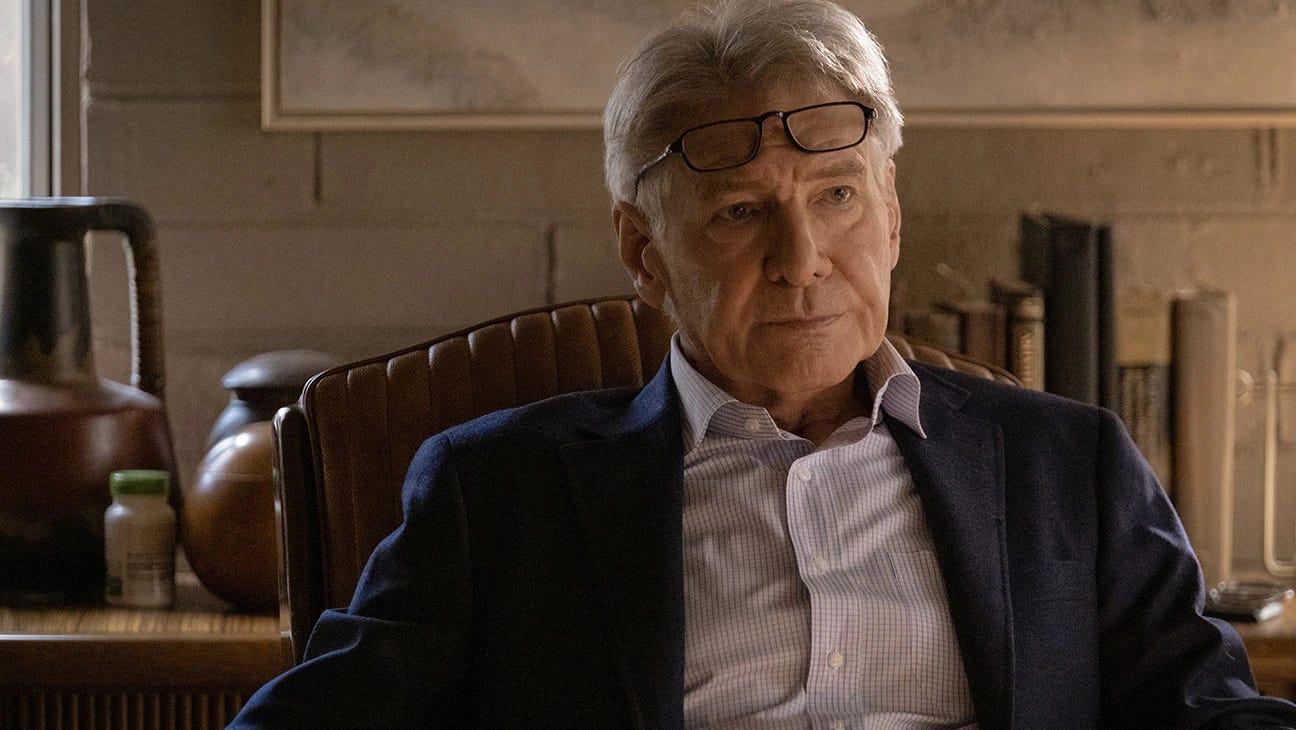
And the show builds him, slowly and carefully, into the most compelling portrait of what it actually looks like when someone in a position of authority decides to stop pretending.
Paul admits he doesn’t have everything figured out. He navigates his diagnosis in front of his colleagues. He lets Jimmy hold his hand. He cries. He makes mistakes and acknowledges them directly.
Ford delivers a masterclass in understated comedic timing and emotional vulnerability, proving he’s still got surprises up his sleeve.
What makes Paul land differently than Ted is that Paul’s vulnerability is never performed. Ted’s warmth has showmanship in it. He’s good at people, he knows it, and he uses it. Paul is not good at being open. It costs him something visible. You can see the effort. And that’s exactly why it’s so powerful when he does it anyway.
The people who lead with the most integrity are usually not the ones for whom vulnerability feels natural. They’re the ones who find it genuinely hard and do it anyway because they understand what it creates in the people around them.
What both shows understand that most leadership discourse gets wrong.
There’s a version of “vulnerability as leadership” that has been thoroughly corporatized.
You’ve seen it. The TED talk, the keynote, the carefully crafted narrative about the difficult thing I went through and what I learned from it. All delivered from behind a podium complete with a resolved ending.
That is not what Ted Lasso and Shrinking are doing.
What makes these moments so important is their placement. Ted is not a supporting character or an outsider, he is the lead of the show. When the lead is shown melting down in the middle of a football match, it’s not because of him being weak; it’s because of him being human.
And Jimmy Laird is not giving a keynote. He is collapsing in real time in front of the people who depend on him. Making mistakes, hurting people along the way, and attempting to repair things over and over again. Even when he gets it wrong, he keeps trying.
In Shrinking, we’re seeing the power of an incredible safety net. We’re seeing a grieving family receive the kind of long-term gentleness and support that gives them the best chance to heal.
That’s what real community looks like when real vulnerability is in the room. Not clean lessons. Messy, long-term, mutual support between imperfect people who show up for each other anyway.
Here’s what I take from both of them:
Vulnerability that makes you look good is not vulnerability. It’s content.
Vulnerability that costs you something…that risks the relationship, that admits the specific failure, that says the true thing while you don’t know the ending yet…that’s the thing that actually changes the people around you.
Ted learned this. Jimmy is still learning it.
And most leaders, most humans, most people who build things or run things or try to help people are somewhere in the middle of that arc. Selectively open. Performing okayness some of the time and doing it honestly at other times. Getting it wrong, trying to repair it, trying again.
The point is not to get to a point where vulnerability feels easy. The point is to do it anyway because you understand what it gives to the room when you do.
Both shows know this. And they’re better for it.
Let me know in the comments if you’ve watched either of these shows. I have more times than I can count and always love to talk about them.
Doubt Yourself Do It Anyway,
Patrick