

Challenging Palatable Autism
Media Pushes The Version That Makes People Comfortable

There are so many marginalized Autistic people who are scrapping and clawing to be seen, understood, and to have their voices heard.
Black and Brown Autistic people who have an extra layer of marginalization, intersecting identities, often those who have been on the margins of society, who have been discriminated against and disenfranchised, having had to fight just to try to get equal footing in a world that tells them that they are not worthy or not good enough.
I look at my social media accounts and my following and acknowledge that the numbers don’t always seem to make sense to me.
The reality is though, I do my best to make relatable content that a lot of people can feel seen and understood by. I do put words and language to hard experiences to humanize experiences that often feel unique or rare.
My goal with content creation has always been to make people feel less alone. It’s cathartic for me to write this way, and it’s hopefully helpful for you to hear these things.
However the reality is that my account and other people who have come into the Autistic advocacy spaces and the neurodiversity spaces over the last few years, who discovered that we were Autistic, ADHD, AuDHD, etc., later in adulthood, have taken up a lot of room, suffocating those who have already been there before us, laying the foundation, doing the work. Oftentimes we get it wrong.
An entire group of people who have been disenfranchised, pushed aside, or have fallen through the cracks then have to spend mental and emotional labor and energy correcting our mistakes or our misguided attempts to make Autism and ADHD something that it’s not.
I have zero doubt that a lot of my popularity and following has come from the fact that I am a white man with a masters degree. Algorithms push what they consider to be a more “palatable” version of what social media and mainstream media consider Autism to be.
Society and mainstream media basically say that if you look like me, if you have an education, if you have a career, if you’re producing or participating in capitalism, then you have some inherent value and therefore are willing to look past the Autistic side of things, and almost as if it’s an anomaly, or like, “yeah, but not you’re not like them.”
There is research showing that algorithms focus more on white faces, meaning that although I make good quality content, there are likely Black and Brown and moderate and high support needs, non-speaking, Trans and Queer Autistic people who have a lot more to say, with much more impactful lived experiences. People who have different perspectives and even more understanding about the scientific research on all things neurodiversity than I will ever have.
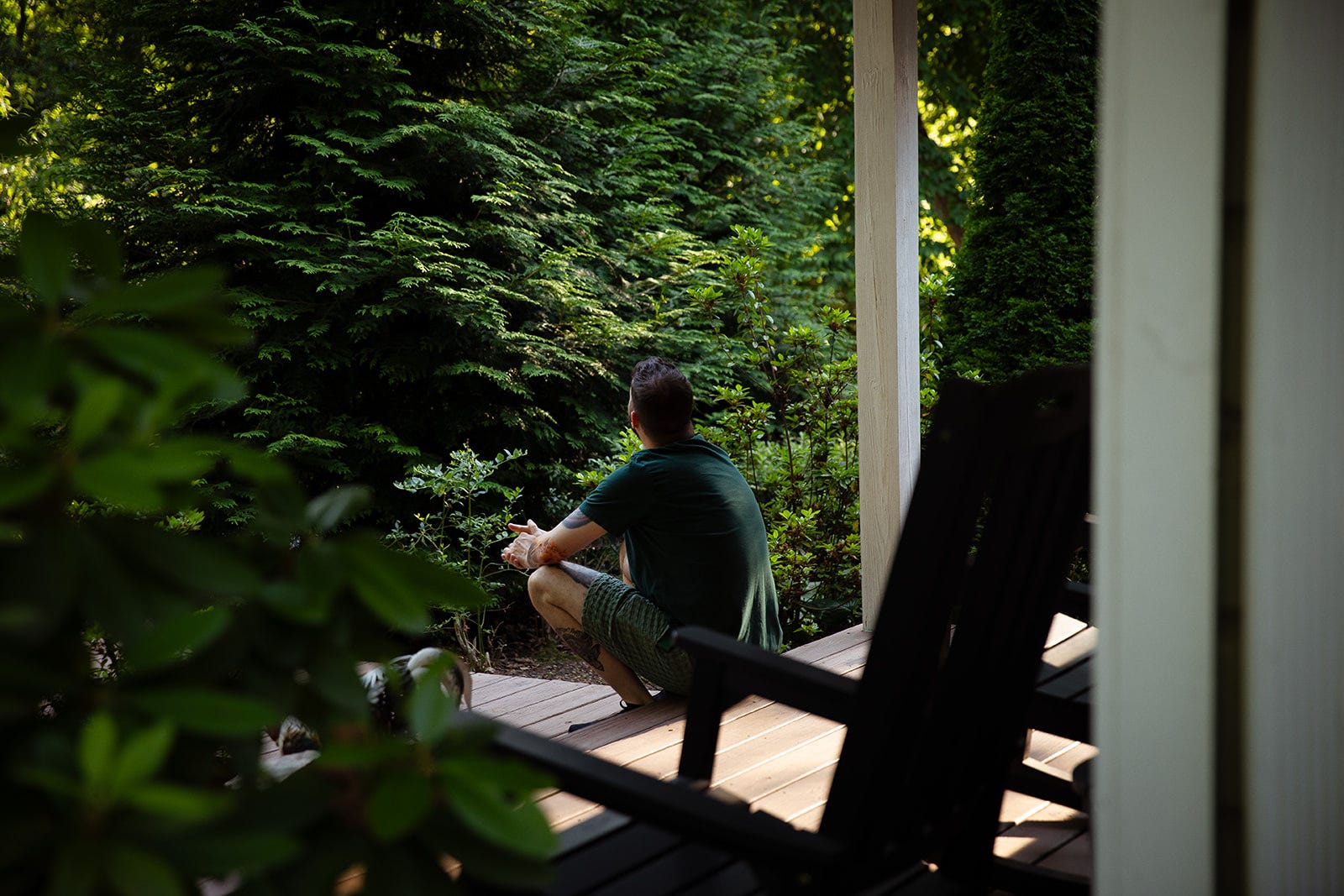
Yet they do not get the engagement that I get because they do not look like me because society has decided that I can be a face for the Autistic community. If I am the face of the Autistic community, then they can help normalize the Autistic existence and experience.
This also has come in the form of partnerships, collaborations, even the book deal that I received. Do I think I don’t deserve it? No. I think I’ve worked my fucking ass off and that I have a lot to say and that my perspective is valid and needed. However there are plenty of people who do not look like me who will never get these opportunities because all of these institutions have decided who they want to support and who they want as an Autistic representative.
I would be lying to myself and to everyone else if we didn’t realize and acknowledge that white privilege in this society is very, very real. Especially in a society that is institutionally and inherently racist. It also means that other people who don’t look like us have to scratch tooth and nail and fight with everything they can just to try to have a seat at the table. Oftentimes society will not even allow them at the main table. They’ll put them to the kiddie table to the side, kind of patting them on the back, saying, “Hey we let you be here. You should be thankful.”
I often don’t know what to do with these feelings aside from talking with my therapist, my friends, and my family. I acknowledge the privilege that I have and the layers of privilege that exist in being a cis-het white man with a master’s degree who is also a small business owner. I don’t necessarily have to tell people that I’m disabled if I don’t want to. People don’t need to know that I’m Autistic, ADHD, Jewish, chronically in pain, or chronically ill. I can mask well enough where all of these things do not exist, or apparent to the outside looking in.
This does not mean that white Autistic people are not also marginalized and are not also disabled and vulnerable. It just means that there are layers of privilege here in terms of race and gender, socioeconomic status, et cetera.
This is just a reminder to amplify and support and advocate the more marginalized members of our community, the more vulnerable members of our community, because if we don’t have our more vulnerable members’ backs then this community is nothing without them. We need to have support for all people, not just people who look like me.
Autism is not a one size fits all nor is it a monolith. It’s certainly not one specific look or presentation and that’s the beauty of a spectrum. There is a lot of beauty in the diversity that exists, and we need to ensure that we are always including it.
Some ways that you can help support the more marginalized members of our community are:
to hire them and pay them what they’re worth to speak, to train, and to consult
to follow their social media accounts and to support their businesses
to share their posts and amplify their voices
to advocate for them in spaces that need more representation
I’d love to hear any actions you’d add to this list, too. Leave them in the comments so we can continue this work together.
As always — Doubt Yourself, Do It Anyway
Until Next Time,
Patrick
I am one of us who doesn't have a lot of language to use, @patrick, so I really appreciate those of you who do have the ability to use your language for the good of all of us. I also see the privilege I have but struggle to help others advocate for themselves since my public language is so fleeting. I wish I knew how to be a better advocate without needing to use my spoken words.
I appreciate and thank you for your continued substack
The system is deeply flawed and broken, my friend. I appreciate this post but yeah, it’s hella frustrating to not be the “acceptable AuDHDer” or the “preferred,” but…I forgot the point I was attempting to make. 💀😅 Bottom line: Awareness really isn’t enough. It’s time for actual action and that’s a key reason I haven’t made neurodivergence “my brand” despite it very much being my identity because who’s going to actually recognize AND pay me for the pattern recognition, taste, and fullness of me? So much frustration to contend with a disability while knowing you’re still more than capable to actually do the things but how and who?