
Blank Space Does Not = Rest
Chronic illness, false hope, and being a medically complex entrepreneur

As a chronically ill entrepreneur who also lives with constant pain, it’s genuinely hard to know when—or if—I’ll have the capacity to do the thing.
The next project.
The next creative spark.
The next obligation.
The next medical appointment.
Present-day me looks at future-me with optimism that borders on delusions of grandeur. I see the blank space on my calendar and think, Yes. This will be better. I convince myself that somehow I’ll be more energized, more regulated, more resourced—despite nearly four decades of lived evidence suggesting otherwise.
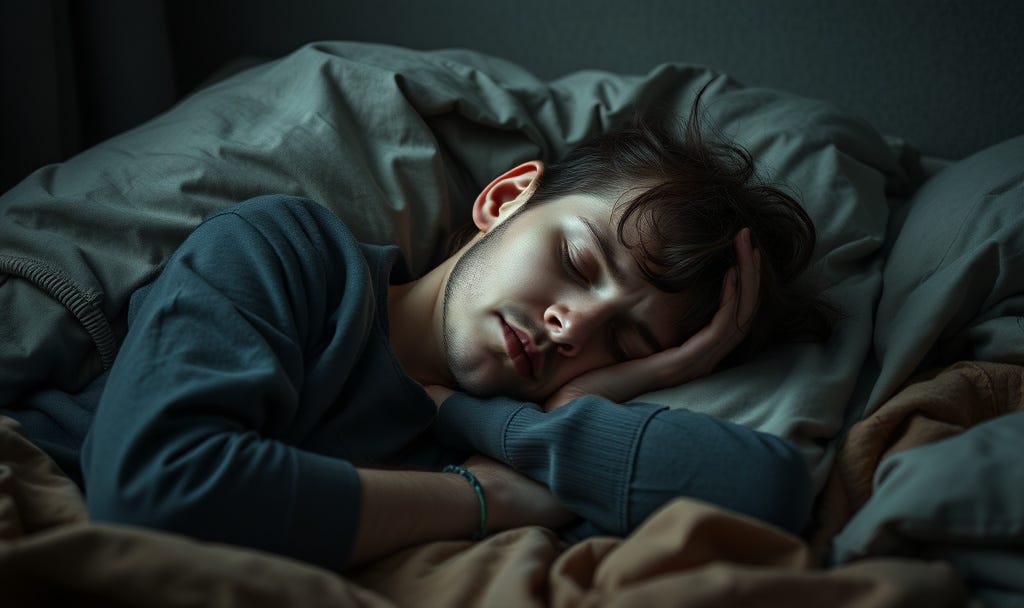
I keep telling myself this time will be different.
And then the thing gets closer.
Life continues to life.
We live in a capitalist hellscape. Bills still need to be paid. Food still needs to be bought. The endless carousel of medical appointments, specialists, copays, and fees keeps spinning whether I’m ready or not.
My nervous system stays stuck in survival. Safety and calm feel theoretical. My sympathetic system lives in overdrive, treating everything like a wildfire, knocking my autonomic nervous system completely off track. Processes that are supposed to happen quietly and subconsciously misfire instead—draining, depleting, exhausting.
Never. Truly. Able. To. Recover.
No matter how much rest.
No matter how much blank space.
No matter how much intention.
And this is a hellacious existence. Not only as a small business owner who frequently has to shift plans and rewrite schedules (a privilege I don’t take lightly), but even more so as a human trying to exist inside a body that won’t cooperate.
From the outside, I look:
Flaky.
Flighty.
Inconsistent.
Unable to follow through.
Unreliable.
Friendships can be hard to maintain.
I often have to cancel at the last minute. Planning for future events, social gatherings, or experiences feels like gambling with a rigged deck. Even when I build in extra time and space—when I do everything “right”—there are always hurdles, always obstacles.
I used to cancel plans drowning in guilt and shame. I’d push past my limits, apologize excessively, and betray myself to spare someone else discomfort.
Now, I intentionally choose relationships—personal and professional—where last-minute cancellations or reschedules aren’t taken as personal failures. It’s the only way I can exist. There is no alternative path.
To honor a body, nervous system, and immune system that don’t play by the rules, I need radical flexibility. And sometimes, that doesn’t work for people. That’s not their fault. I know I talk a lot about unmasking, accommodation, and flexibility—and so do many others—but the reality is that the life of a chronically ill, medically complex human won’t work for everyone. Even with good boundaries. Even with mutual care. Even with the best intentions.
I know it can feel one-sided.
And still—the more I honor what I actually need to feel okay, the more I’m able to support myself in ways I never thought possible.
In many ways, this isn’t just modeling for others. It’s for my inner child, who needed this level of care and never received it.
So the next time you have to cancel, reschedule, or move that meeting or social plan, I hope you resist the urge to punish yourself. I hope you choose compassion over shame. And I hope you honor exactly what you need to feel supported—without apology.
Thanks, as ever for your clarity of insight, Patrick. What jumped out at me, reflecting on the eternal shame, guilt and apologizing (for so many of us) - was the thought that if exhaustion had spots, if pain showed up in green, if our rapidly decreasing bandwidth was obvious from a gauge on our foreheads - then there wld be no need for shame and guilt and apologies.
It wld be clearly evident* that our bodies weren’t playing ball, that there was nothing left in the tank, and of course we wldn’t be in any fit state to follow through on our commitments.
And it made me realise just how much ‘hidden’ disabilities, by their very nature, fail to hold any traction at all in a visually driven, fundamentally capitalist, society.
It’s the diametrical opposite of a visual disability - where society assumes that the wheelchair, the white stick, the body ticks means their owner has little if any capacity at all. We do now have the sunflower lanyard🌻 - which goes someway to highlight the hidden nature of our own bodies’ challenges. But they often cause confusion in the ignorant and elicit fear or pity in the knowledgeable.
I crave the day when it’s enough just to state clearly, and without the need for excuse or excessive explanation, that whatever’s planned needs to change. No drama, no shame, job done.
And I applaud you for leading the way.
(*Apols to any visually impaired readers for whom this might not apply.)
Yup. And the forgetting. Can we talk about the forgetting? Forgetting what DOES feel nourishing, what DOES feel peaceful? And then forgetting to do that? Ugh. I have been late diagnosed ASD, but suspect AuDhd the more I read. Thanks for posting.